
产品信息
了解和学习
案例研究





Select your region or country.
波前传感器性能提升的自适应光学装置的演化
2026 年 3 月 12 日发布
观测太阳系外行星的方法有很多种,至今已使用这些方法发现了约 4,000 颗太阳系外行星。其中,只有约 10 到 20 颗太阳系外行星通过使用望远镜的“直接成像”观测装置得到证实。我们研究的主要任务是提高直接成像观测设备的精度,以便捕捉到尽可能多的行星发出的光。
自适应光学是一种技术,可立即校正受大气波动干扰的波前,并在望远镜性能限制内获得极清晰的星像且不会失真。它还是观测装置的关键部件。
为了实现实时、高精度的波前校正,需要具备快速读出性能和高分辨率。此外,有时在光子数量非常少的情况下也会进行波前校正,例如较暗的天体和激光人工星,这种情况要求相机具有高灵敏度。
提升性能需要什么?且一旦达到极限性能,将会实现什么? 我们向 Dr. Kodai Yamamoto of the Astronomical Observatory, Graduate School of Science, Kyoto University 询问了自适应光学的当前性能及未来应用前景,Dr. Kodai Yamamoto致力于利用巨型望远镜对太阳系外行星进行直接成像。
渴望利用望远镜观测设备直接拍摄行星自身发出的光
-能否谈谈利用自适应光学进行行星观测的现状?
目前我们正在 Okayama Prefecture 县建造一个安装在新建日本大型望远镜“Seimei”上的观测装置。该装置将用于对太阳系外行星进行直接成像。
全球首例直接光学探测到太阳系外行星发生在 2008 年左右。自那时起,在发现的约 4,000 颗太阳系外行星中,只有 10 到 20 颗太阳系外行星通过这种方式得到证实。因此,我们直接拍摄到的行星其实只有 10 到 20 颗,这意味着我们真正探测到的行星数量非常少。
数量少的原因在于能够直接成像的观测装置的性能仍然不足。然而,另一个挑战则是,太阳系外行星是位于恒星附近的极暗的物体,恒星本身就会发光,因此很难探测到太阳系外行星发出的光。
我们为前面提到的望远镜“Seimei”开发了太阳系外行星成像仪“Second-generation Exoplanet Imager with Coronagraphic AO (SEICA)”,并正在尝试寻找更暗的天体。但我们的设备性能尚不足以探测未被发现的行星。
一些全球大型望远镜,如斯巴鲁望远镜和智利的甚大望远镜,口径为 8 米至 10 米,具备高探测性能。鉴于望远镜的探测性能会随着口径的增大而增强,而“Seimei”的口径尚不足上述大型望远镜的一半,故其性能较差。尽管观测设备的性能越来越好,但仍然不足以探测到恒星附近的极暗物体。
为使用大型望远镜对行星进行直接成像奠定基础
-自适应光学装置“SEICA”是为了通过直接成像寻找太阳系外行星而开发的。我确信未来仍需进一步提升其性能。但您期望通过提高其性能达到怎样的效果呢?
“SEICA”有两个目标。一是探测太阳系外行星,二是作为未来可应用于大型望远镜的技术的试验台。
如上所述,其实尝试开发一项新技术很难,因为目标太暗且离恒星太近。这并非观测困难的唯一原因。另一影响图像质量的主要因素是大气。当大气受到干扰时,图像就会以所谓的星星闪烁的形式发生扭曲,且图像轮廓会变得模糊或偏移,进而导致难以获得清晰的图像。自适应光学技术已被开发,以抵消这种大气湍流的影响。
虽然我们的主要目标是通过对行星的直接成像来阐明行星的实际状态,但我们也希望我们的研究能够提升自适应光学系统的性能,并为未来使用配备自适应光学系统的大型光学望远镜对行星进行直接成像奠定基础。

自适应光学装置“SEICA”
提升波前传感器的性能是演化的关键

-我听说,要想实现“探测太阳系外行星”这一目标,提升自适应光学系统的性能至关重要。要实现这一目标,最关键的是什么?
自适应光学装置中,有一款极端自适应光学装置,名为“Extreme AO”。Extreme AO 也用于斯巴鲁望远镜,但我们开发的装置使用 FPGA 实现更快、更精准的波前控制。我们追求如此高精度的波前控制的原因在于,消除大气湍流的方式直接关系到成像的精度。
其实,大气本身的形状并未发生太大的变化。如果以约 1 kHz 或 6.5 kHz 的频率观测,它的形状几乎不变,但有风的时候,它就会被吹走。因此,对于你正在观测的波前形状,你认为“这就是了”,但下一刻它就会消失不见,你将看到另一个形状。因此,测量和校正之间的时间延迟会以误差形态呈现。严格来说,它不仅在实时测量波前的同时进行校正,而且还会结合控制算法进行控制,该控制可预测并在风产生影响前校正波前。
传统的“倾斜测量”波前传感器通过观测波前每个点的倾斜度并将其积分回原始形状来检查其波前形状,但由于进行了积分处理,故每个点的测量误差也会传递到整体形状测量中。但是,我们的自适应光学装置采用的是“相位测量”,可以直接测量“波前的这个位置的高度”。
由于可以直接测量相位,因此不太可能出现测量误差。由于自适应光学系统对太阳系外行星的直接成像要求高速度、高精度的波前控制,因此波前测量也要求高速度、高精度的波前控制。提升波前传感器的性能对自适应光学的演化至关重要。
寻找地球外的生命
-我想更详细地问一下第二个问题:“应用于大型望远镜”。此外,能否谈谈您进行研究时的想法?
在研究太阳系外行星的层面上,我相信研究人员认为的终极目标是“在地球以外的地方寻找生命”。当然,通过光学手段直接在行星表面发现生命是根本不可能的,所以我认为人们希望能够对植物的外观、氧气的存在以及大气的组成等进行适当的研究,这将使我们更接近发现生命的目标。
换言之,直接成像意味着可以进行光谱分析。如果可以进行光谱分析,就能获得关于存在哪些种类分子的关键线索。我相信我们这一代人的终极目标是通过直接成像来获取地球外是否存在生命、如果存在以及存在怎样的生命的线索。
旨在开发一种消除湍流影响的装置
就装置开发而言,我们所说的“终极”指的是创建一种完全消除大气湍流影响的自适应光学装置的终极目标。与约 20 年前的自适应光学装置相比,目前正在开发的自适应光学装置在性能上有了很大的提升,越来越接近于实现漂亮波前的控制水平,但还不能称为真正意义上的终极自适应光学装置。终极装置需要更快的测量、计算和校正。如果没有这些追求,终极目标就无法实现。
相机也是提高装置性能的重要因素
-为了实现更快的计算、运算和校正,高速度、高精度的波前传感器必不可少,这意味着捕捉图像的 2D 传感器,也就是相机端,也需要具有同样高的性能,对吗?
对。毕竟我们想要的是高速度和低噪声。如前所述,从测量波前到应用校正之间存在时间延迟,而这种延迟会导致时间误差。因此,相机拍摄的校正后波前图像几乎成为系统的速度瓶颈。采集速度越快,曝光时间越短,每帧能检测到的光子数量就会越少。这就是我为什么说我们想要的是高速度和低噪声,但二者之间存在实际权衡,因此采集速度越快,读出噪声和光子噪声就会越高,反之,若试图降低噪声水平,图像中又必然会出现时间误差。
为了解决二者之间的权衡,预测控制已被引入控制算法中。但由于计算成本问题(包括硬件和软件方面),要实现复杂的控制会很困难。如果构建从测量到控制的专用电路,可以将计算时间缩短到极限,但专用电路成本高昂,且不易修改。通用 PC 还具有可以自由开发和改变算法的优势。因此,我们采用 FPGA 作为控制装置,它是 PC 和专用电路之间的中间装置。
即使算法消除了权衡,为波前传感器选择合适的相机仍然至关重要。我们尽量精心选择并采用同时具备高速度和低噪声的产品。
Researcher profile

Kodai Yamamoto, Ph.D.
Researcher at the Astronomical Observatory of the Graduate School of Science, Kyoto University (inter-university collaboration).
Completed doctoral program at the Graduate School of Science, Osaka University in 2014.
Yamamoto specializes in infrared astronomy, and engages in direct imaging observations of extrasolar planets, and development of observation equipment.
*采访于 2020 年进行。
相关产品

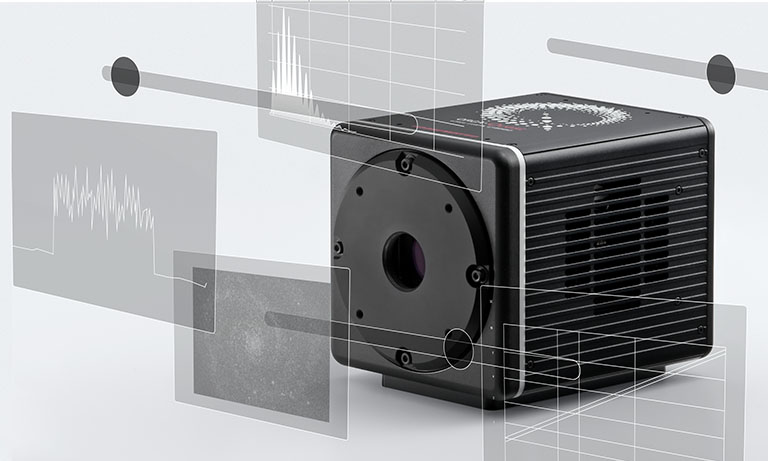
带 sCMOS 传感器的数字 CMOS 相机,专为科研用途而设计。与 ORCA-Flash4.0 相比,它具有更高的分辨率和灵敏度(尤其是在 NIR 区域)。(峰值 QE 为 82%)
其他案例研究
- Confirmation
-
It looks like you're in the . If this is not your location, please select the correct region or country below.
You're headed to Hamamatsu Photonics website for (Chinese). If you want to view an other country's site, the optimized information will be provided by selecting options below.
In order to use this website comfortably, we use cookies. For cookie details please see our cookie policy.
- Cookie Policy
-
This website or its third-party tools use cookies, which are necessary to its functioning and required to achieve the purposes illustrated in this cookie policy. By closing the cookie warning banner, scrolling the page, clicking a link or continuing to browse otherwise, you agree to the use of cookies.
Hamamatsu uses cookies in order to enhance your experience on our website and ensure that our website functions.
You can visit this page at any time to learn more about cookies, get the most up to date information on how we use cookies and manage your cookie settings. We will not use cookies for any purpose other than the ones stated, but please note that we reserve the right to update our cookies.
1. What are cookies?
For modern websites to work according to visitor’s expectations, they need to collect certain basic information about visitors. To do this, a site will create small text files which are placed on visitor’s devices (computer or mobile) - these files are known as cookies when you access a website. Cookies are used in order to make websites function and work efficiently. Cookies are uniquely assigned to each visitor and can only be read by a web server in the domain that issued the cookie to the visitor. Cookies cannot be used to run programs or deliver viruses to a visitor’s device.
Cookies do various jobs which make the visitor’s experience of the internet much smoother and more interactive. For instance, cookies are used to remember the visitor’s preferences on sites they visit often, to remember language preference and to help navigate between pages more efficiently. Much, though not all, of the data collected is anonymous, though some of it is designed to detect browsing patterns and approximate geographical location to improve the visitor experience.
Certain type of cookies may require the data subject’s consent before storing them on the computer.
2. What are the different types of cookies?
This website uses two types of cookies:
- First party cookies. For our website, the first party cookies are controlled and maintained by Hamamatsu. No other parties have access to these cookies.
- Third party cookies. These cookies are implemented by organizations outside Hamamatsu. We do not have access to the data in these cookies, but we use these cookies to improve the overall website experience.
3. How do we use cookies?
This website uses cookies for following purposes:
- Certain cookies are necessary for our website to function. These are strictly necessary cookies and are required to enable website access, support navigation or provide relevant content. These cookies direct you to the correct region or country, and support security and ecommerce. Strictly necessary cookies also enforce your privacy preferences. Without these strictly necessary cookies, much of our website will not function.
- Analytics cookies are used to track website usage. This data enables us to improve our website usability, performance and website administration. In our analytics cookies, we do not store any personal identifying information.
- Functionality cookies. These are used to recognize you when you return to our website. This enables us to personalize our content for you, greet you by name and remember your preferences (for example, your choice of language or region).
- These cookies record your visit to our website, the pages you have visited and the links you have followed. We will use this information to make our website and the advertising displayed on it more relevant to your interests. We may also share this information with third parties for this purpose.
Cookies help us help you. Through the use of cookies, we learn what is important to our visitors and we develop and enhance website content and functionality to support your experience. Much of our website can be accessed if cookies are disabled, however certain website functions may not work. And, we believe your current and future visits will be enhanced if cookies are enabled.
4. Which cookies do we use?
There are two ways to manage cookie preferences.
- You can set your cookie preferences on your device or in your browser.
- You can set your cookie preferences at the website level.
If you don’t want to receive cookies, you can modify your browser so that it notifies you when cookies are sent to it or you can refuse cookies altogether. You can also delete cookies that have already been set.
If you wish to restrict or block web browser cookies which are set on your device then you can do this through your browser settings; the Help function within your browser should tell you how. Alternatively, you may wish to visit www.aboutcookies.org, which contains comprehensive information on how to do this on a wide variety of desktop browsers.
5. What are Internet tags and how do we use them with cookies?
Occasionally, we may use internet tags (also known as action tags, single-pixel GIFs, clear GIFs, invisible GIFs and 1-by-1 GIFs) at this site and may deploy these tags/cookies through a third-party advertising partner or a web analytical service partner which may be located and store the respective information (including your IP-address) in a foreign country. These tags/cookies are placed on both online advertisements that bring users to this site and on different pages of this site. We use this technology to measure the visitors' responses to our sites and the effectiveness of our advertising campaigns (including how many times a page is opened and which information is consulted) as well as to evaluate your use of this website. The third-party partner or the web analytical service partner may be able to collect data about visitors to our and other sites because of these internet tags/cookies, may compose reports regarding the website’s activity for us and may provide further services which are related to the use of the website and the internet. They may provide such information to other parties if there is a legal requirement that they do so, or if they hire the other parties to process information on their behalf.
If you would like more information about web tags and cookies associated with on-line advertising or to opt-out of third-party collection of this information, please visit the Network Advertising Initiative website http://www.networkadvertising.org.
6. Analytics and Advertisement Cookies
We use third-party cookies (such as Google Analytics) to track visitors on our website, to get reports about how visitors use the website and to inform, optimize and serve ads based on someone's past visits to our website.
You may opt-out of Google Analytics cookies by the websites provided by Google:
https://tools.google.com/dlpage/gaoptout?hl=en
As provided in this Privacy Policy (Article 5), you can learn more about opt-out cookies by the website provided by Network Advertising Initiative:
http://www.networkadvertising.org
We inform you that in such case you will not be able to wholly use all functions of our website.
Close